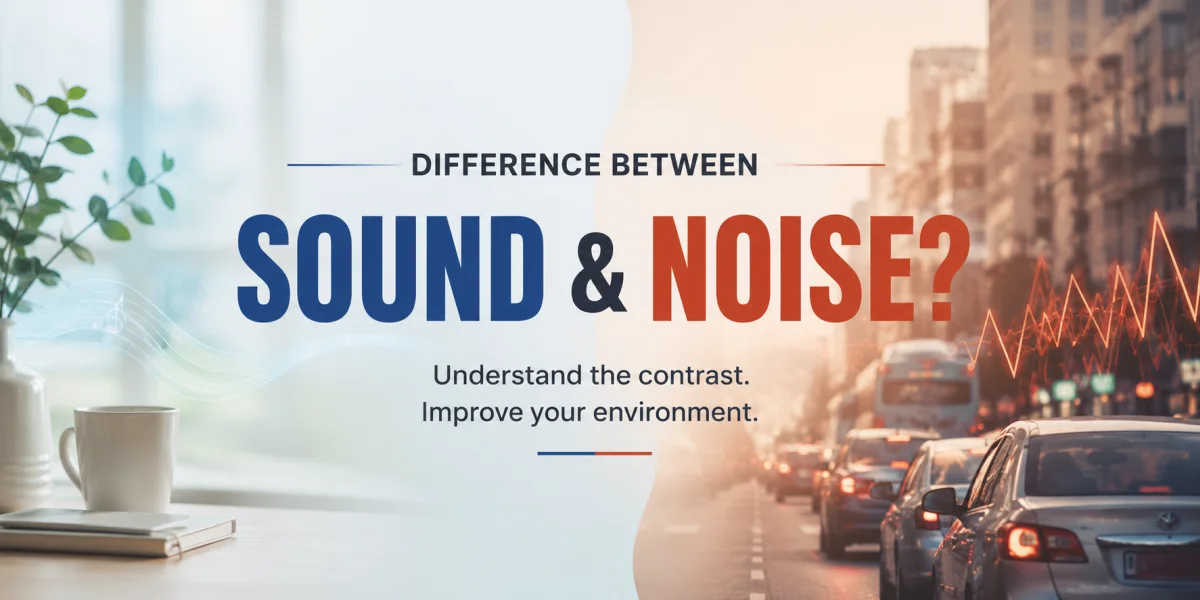
Sound Is Physics. Noise Is an Opinion.
Sound is vibration traveling through the air and reaching your ears. That's it — a physical event you can measure with a microphone, no judgment involved.
Noise is what happens once your brain gets a vote. It's sound that's been labeled unwanted, disruptive, or harmful.
Every noise is a sound. Most sounds, though, never become noise at all.
The Same Wave, Two Different Verdicts
What's confusing about this is that the sound wave itself doesn't change. Context does all the work.
Take a party a few doors down. To the people dancing, it's music — good energy, worth turning up. To the neighbor trying to fall asleep at midnight, the exact same waveform is an assault. Nothing about the physics changed between those two rooms. Only the listener did.
A dog barking once at a squirrel is background life. That same dog barking for three hours straight is a different experience entirely, even though it's the identical sound repeating.
What Tips a Sound Into Being Noise
A handful of things tend to decide which side of the line a sound lands on.
| Factor | Effect |
|---|---|
| Volume | Louder sounds are more likely to feel intrusive or uncomfortable. |
| Duration | A short sound is easy to ignore; a constant one wears you down. |
| Timing | The same sound feels worse at night, or while you're trying to work or study. |
| Predictability | Sudden, random sounds feel more disruptive than steady, expected ones. |
| Control | Sounds you can't stop or walk away from feel worse than ones you can. |
Volume is usually the first thing people blame, but timing and control do a lot more damage than most people give them credit for. A quiet drip at 3 a.m. can ruin your night more thoroughly than a loud but brief thunderclap.
Why This Actually Matters
It's not just semantics. Ongoing noise raises stress hormones even when the volume itself is fairly moderate. It breaks up sleep more readily than sound you don't mind. And it chips away at focus in ways you don't always notice until the task is done and you realize how tired you are.
Loud, unwanted sound over a long enough stretch can also damage hearing — that part is straightforwardly physical, no interpretation required. But most of the day-to-day cost of noise shows up as stress and lost attention long before hearing damage enters the picture.
So Is It Sound, or Is It Noise?
Your gut reaction is a start, but it's not always reliable — you can get used to a bad sound and stop noticing it, which doesn't mean it stopped costing you anything. A real decibel reading turns "this feels loud" into a number you can actually compare and track over time.
Our Noise Meter does exactly that, live, from your browser — no app to install.
A few questions worth asking yourself the next time something's bothering you: how loud is it, really, according to the meter and not just your gut? Does it come and go, or does it just keep going? Is the timing making it worse than it would otherwise be? And can you actually do anything about it, or are you stuck with it?
If most of your answers point the wrong way, you've stopped dealing with sound. You're dealing with noise.
The Short Version
Sound is neutral — vibration reaching your ears, nothing more. Noise is sound your brain has decided is a problem, and that decision leans heavily on volume, but also on duration, timing, predictability, and whether you have any control over it. Two people can hear the identical wave and walk away with completely different experiences.
When you're not sure which one you're dealing with, don't guess. Open the Noise Meter and look at the actual number.