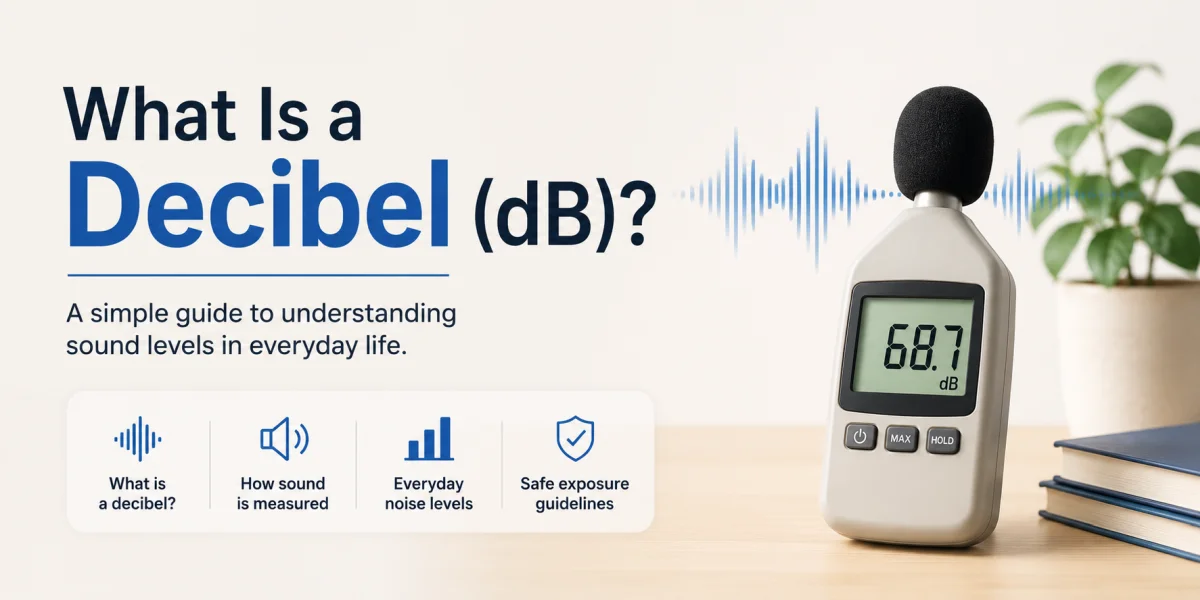
Decibels, in Plain Terms
The decibel scale begins at 0 dB, which is close to the faintest sound a healthy person can hear under ideal conditions. It’s like a pin dropping in a silent room. As the numbers increase – sounds become much louder. A quiet library is usually around 40 dB. A normal conversation is about 60 dB. Heavy traffic can reach 85 dB or even more.
Why 10 dB Louder Doesn't Mean "10 Percent Louder"
The decibel scale works differently from a regular counting scale – it is logarithmic. Human ears don't process sound volume linearly. Every 10 dB jump only feels roughly twice as loud to us – even though the physical energy spikes dramatically.
The difference between 10 dB and 30 dB is much greater than it looks. A 30 dB sound contains 100 times more energy - and our hearing perceives a far smaller change. That’s why an increase from 70 dB to 80 dB feels like such a huge spike in actual volume. Understanding how this logarithmic curve works gives you a much clearer picture of real-world sound exposure.
What Different Sounds Actually Measure
Numbers are easier to picture next to things you already know. Here's roughly where common sounds land.
| Sound Source | Approximate Level (dB) | How It Feels |
|---|---|---|
| Rustling leaves | 10 dB | Barely audible |
| Whisper | 30 dB | Very quiet |
| Quiet library | 40 dB | Calm and peaceful |
| Normal conversation | 60 dB | Comfortable |
| Busy traffic | 70–85 dB | Noticeably loud |
| Motorcycle | 90 dB | Uncomfortable over time |
| Rock concert | 110–120 dB | Potentially harmful |
| Jet engine at takeoff | 130+ dB | Painful, damaging |
Where "Loud" Turns Into "Harmful"
Comfort and safety aren't the same line. You can be perfectly comfortable at a level that's already doing damage, because hearing loss from noise doesn't hurt while it's happening — you only notice it afterward.
- Below 70 dB: Generally safe, even with long exposure.
- 70–85 dB: Fine for short periods, but long exposure builds up fatigue.
- 85 dB and above: This is roughly where prolonged exposure starts damaging hearing.
- 100 dB and above: Damage can happen in minutes, not hours.
- 120 dB and above: Pain and permanent damage, almost immediately.
What makes this genuinely tricky is the timeline. Noise damage rarely announces itself. It accumulates quietly over years of ordinary exposure — commutes, concerts, headphones turned up one notch too high — until one day it's simply there.
Why Guessing Isn't Good Enough
Almost nobody actually measures the noise around them day to day. Most of us just go by feel, and feel is a bad instrument.
A busy café doesn't sound alarming while you're in it. Neither does a noisy open-plan office, or a street with steady traffic. These environments creep past healthy levels quietly, precisely because nothing about them feels dramatic in the moment.
A real number changes that. It tells you when it's time to reach for ear protection, whether a room is actually safe for a baby to nap in, and which parts of your day are doing more damage than they seem to.
Measuring It Yourself Takes About Ten Seconds
You don't need a dedicated sound meter for this — the microphone already in your phone or laptop is enough to get a useful reading.
Open the Noise Meter, allow microphone access, and you'll see a live dBA number update as the room changes around you. Nothing is recorded or sent anywhere; it all happens right there in the browser.
Try it next to a running blender, then again in a quiet room a few minutes later. Seeing the actual gap between those two numbers tends to be more convincing than any explanation of logarithms.
The Short Version
Decibels measure loudness, but not on a scale that behaves the way most numbers do — each 10 dB step is a tenfold jump in energy, not a small increment. Comfort and hearing damage part ways around 85 dB, and the damage tends to build silently long before you'd notice anything wrong.
If you're not sure how loud your surroundings really are, stop guessing. Open the Noise Meter and look at the number.